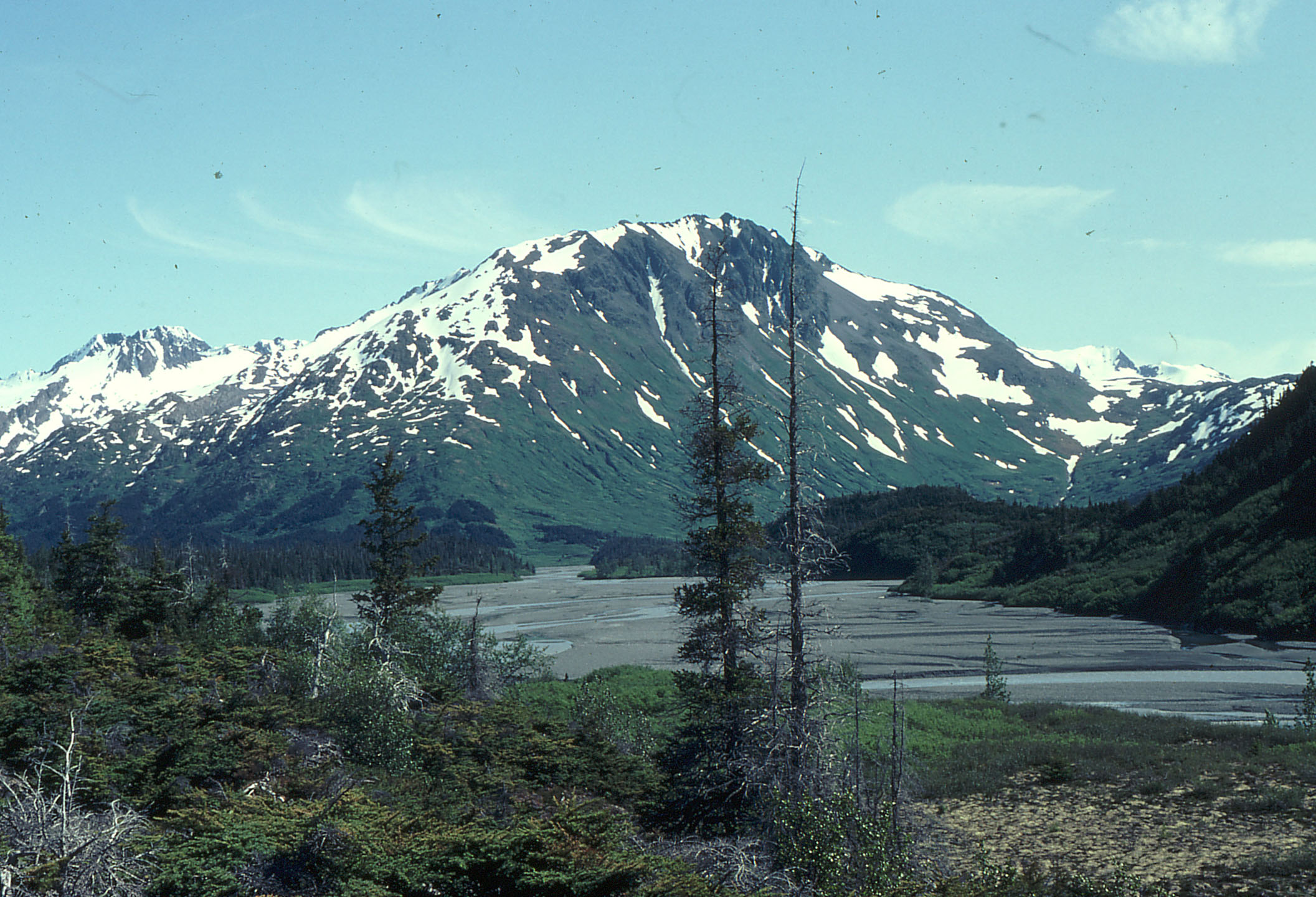
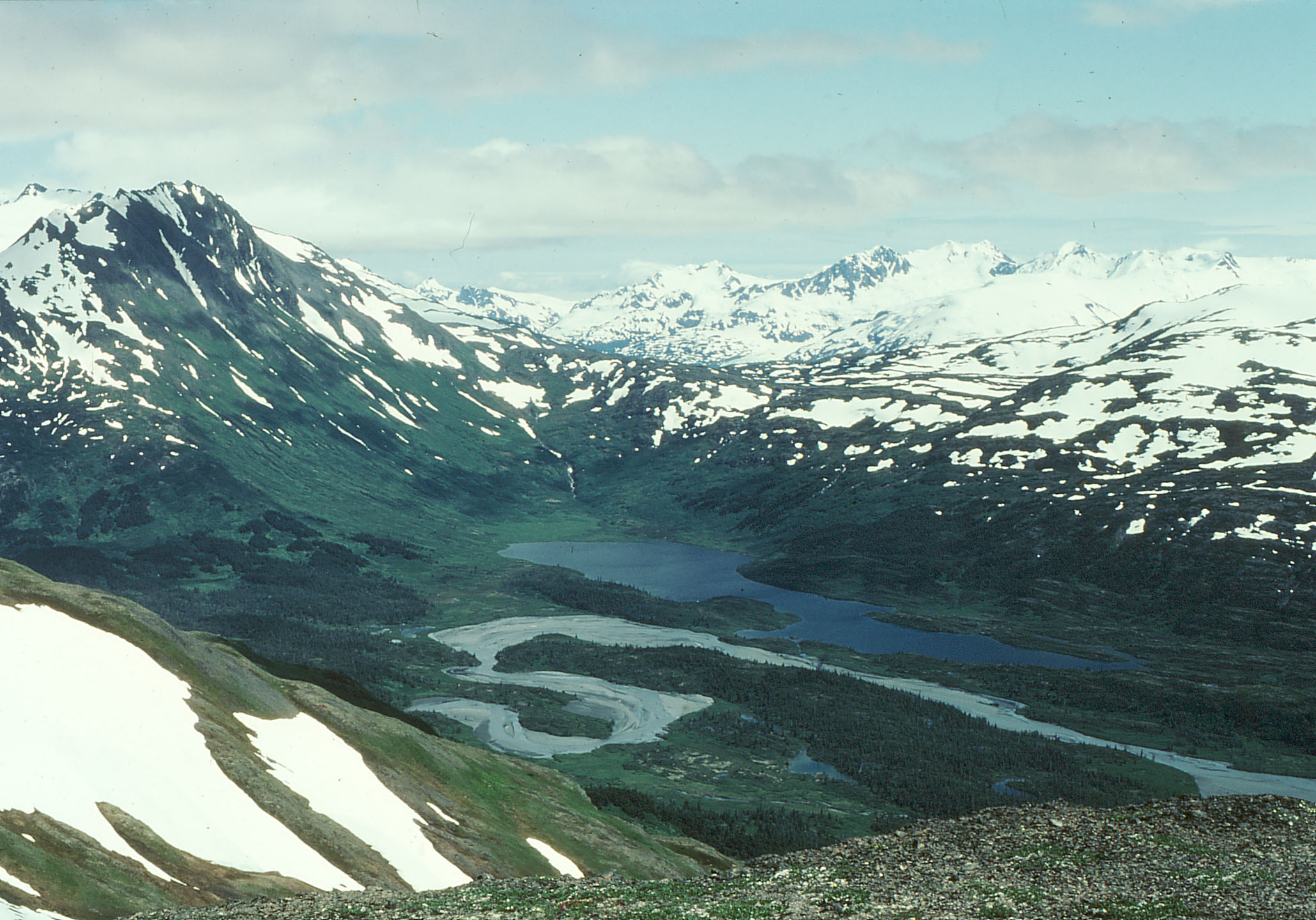
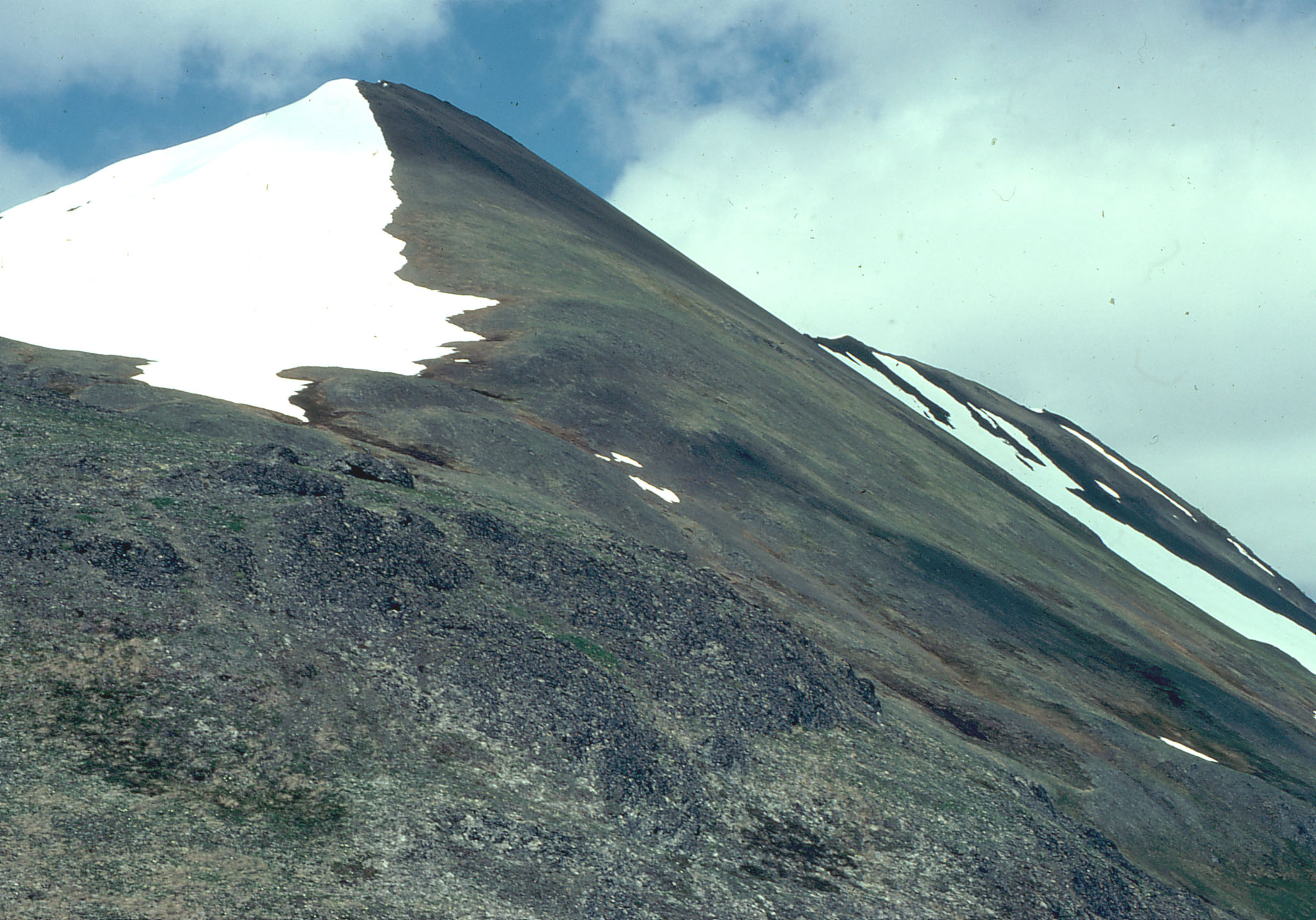
Tundra above Lower Paradise Lake, Chugach National Forest, Alaska (c) 2005 Carol and Steve Baskauf
Bioimages home (click on an image to enlarge)
view
this page in its intended navigation context
Pacific Coastal Mountain icefields and
tundra (WWF
ecoregion NA1117)
Tundra above Lower Paradise Lake, Chugach
National Forest, Alaska (c) 2005
Carol and Steve Baskauf
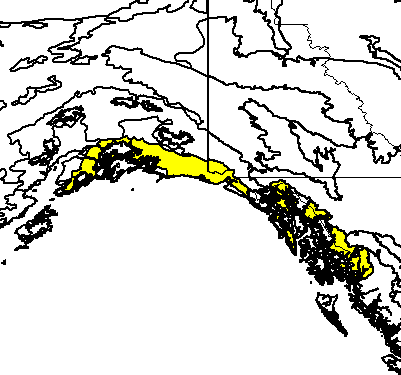
Source of bioregions data:
Olson, D. M. and
E. Dinerstein. The Global 200: Priority ecoregions for global conservation. (PDF
file) Annals of the Missouri Botanical Garden 89:125-126.
Distinctiveness (1=highest,4=lowest): 3 (bioregionally
outstanding)
Much of this region lies beneath glaciers and ice fields. In valleys,
hemlock, spruce, and fir are present. The ecosystems are generally intact,
including top predators.*
Conservation Status (1=most endangered, 5=most
intact): 5 (relatively intact)
The ecoregion is about 95% intact, with minor disturbance from mines and roads.*
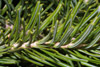 | Abies lasiocarpa | (subalpine fir) |
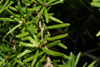 | Tsuga mertensiana | (mountain hemlock) |
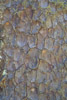 | Picea sitchensis | (Sitka spruce) |
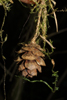 | Tsuga heterophylla | (western hemlock) |
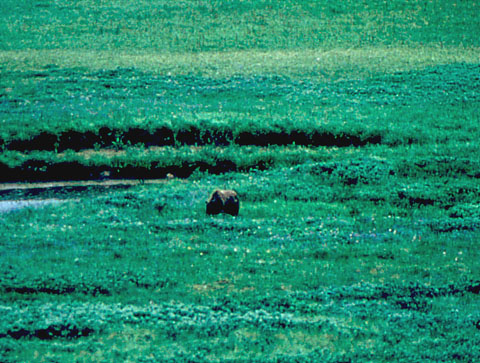 Ursus
acrtos (brown bear) (c) 2005
Carol and Steve Baskauf
Ursus
acrtos (brown bear) (c) 2005
Carol and Steve Baskauf
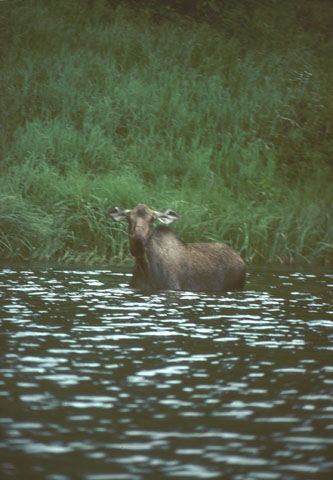
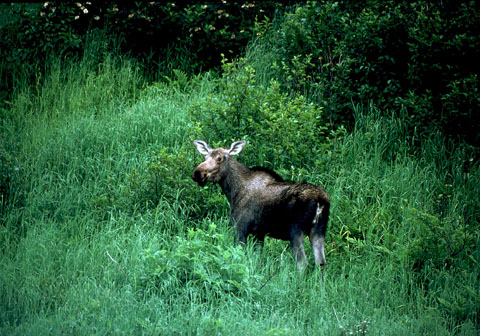 Alces
alces (moose) (c) 2005
Carol and Steve Baskauf
Alces
alces (moose) (c) 2005
Carol and Steve Baskauf
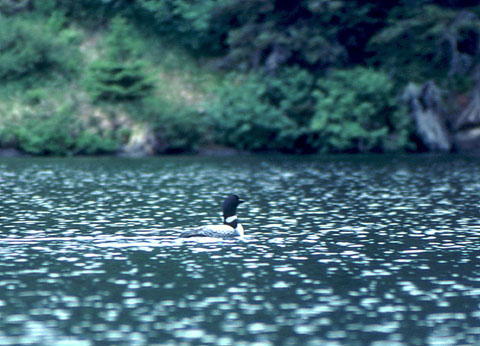 Gavia
immer (common loon) (c) 2005
Carol and Steve Baskauf
Gavia
immer (common loon) (c) 2005
Carol and Steve Baskauf
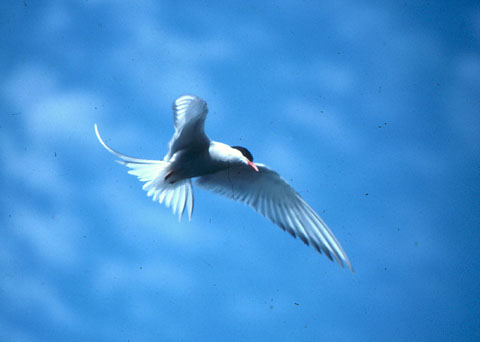 Sterna
paradisaea (arctic tern) (c) 2005
Carol and Steve Baskauf
Sterna
paradisaea (arctic tern) (c) 2005
Carol and Steve Baskauf
Some views from the ecoregion

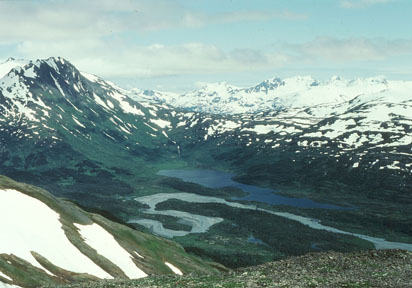
forested area along river (l), Upper Paradise Lake (r), Chugach National Forest,
Alaska (c) 2005
Carol and Steve Baskauf hires
hires
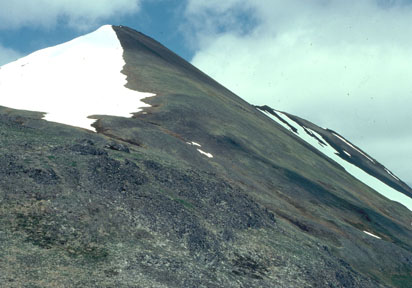
tundra in this area is often on steep slopes, Chugach National Forest, Alaska
(c) 2005 Carol and Steve Baskauf
hires
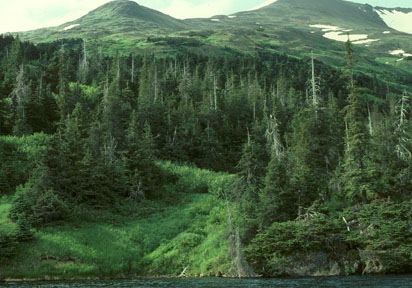
treeline, Lower Paradise Lake, Chugach National Forest, Alaska
(c) 2005 Carol and Steve Baskauf
hires
* Ricketts, T.H., E. Dinerstein, D.M. Olson, C.J. Loucks, et al. (1999) Terrestrial Ecoregions of North America: A Conservation Assessment. World Wildlife Fund - United States and Canada. Island Press, Washington, D.C. pp. 337-340.
Except as noted, images copyright 2002-2005 Steve Baskauf - Terms of use